Morton Feldman, Mark O'Leary and the Art of Deep Listening
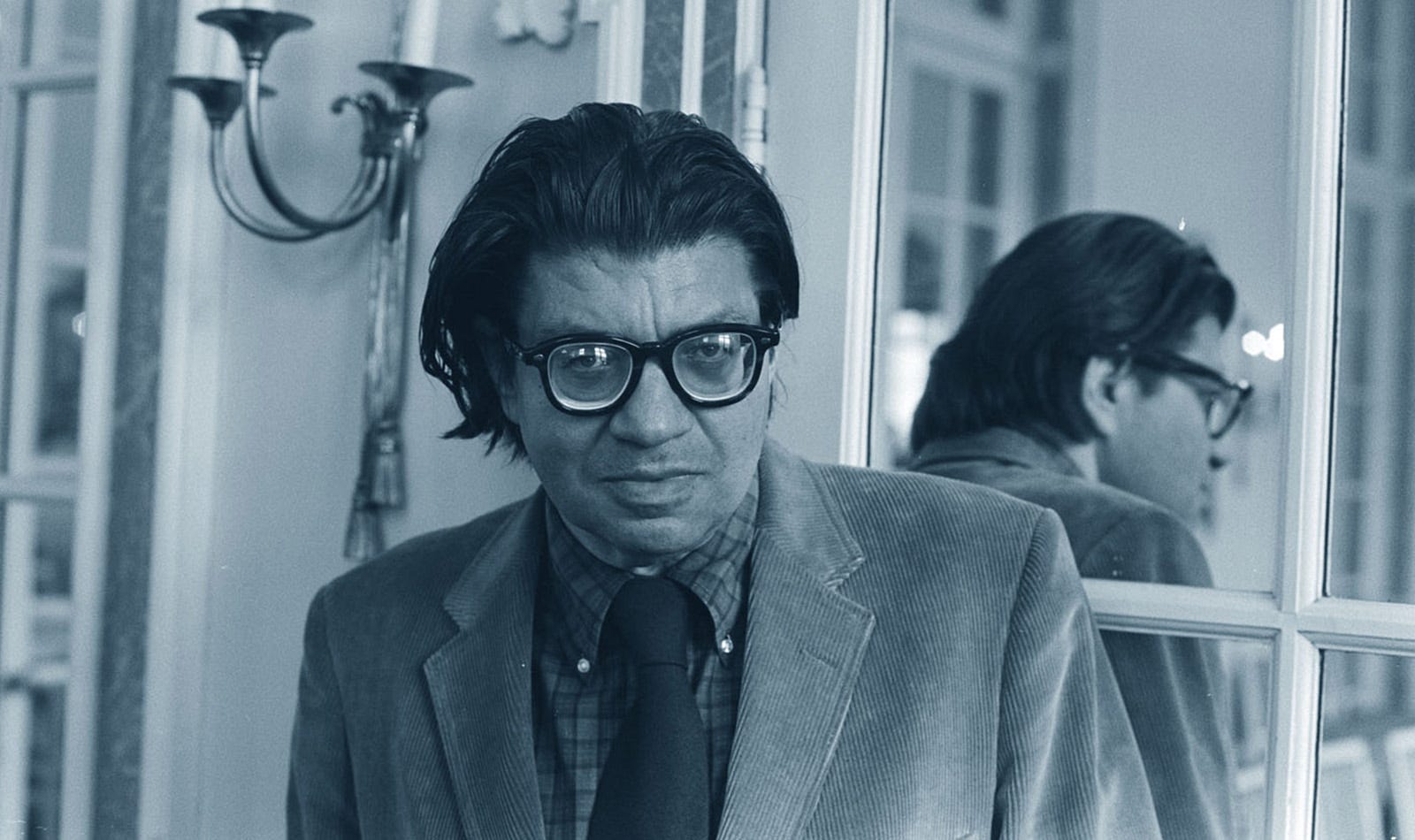
From the radical stillness of the New York School to the spacious improvisations of one of Ireland's most adventurous composers, the aesthetic of Morton Feldman continues to reverberate through contemporary music. Mark O'Leary's work reveals how silence, timbre and duration remain among the most compelling materials available to modern composition.
Some music asks to be understood. Morton Feldman's asks to be inhabited.
His compositions seem almost to suspend time itself. Melody refuses to resolve, rhythm relinquishes its customary authority, and silence ceases to function as the space between events. Instead, silence becomes the event. Feldman transformed listening from an act of anticipation into one of attention, inviting audiences to dwell inside sound rather than pursue its destination.
Although separated by generations and working within very different musical worlds, Feldman and Irish guitarist and composer Mark O'Leary share a striking artistic affinity. Their connection is not one of imitation but of temperament. Both are drawn towards duration, timbre, restraint and the expressive possibilities that emerge when music resists the impulse to fill every available space.
Rather than existing as a historical influence to be dutifully acknowledged, Feldman's aesthetic continues to reverberate through O'Leary's work. It also resonates across a broader constellation of artists including John Cage, Brian Eno, John Tilbury, Ryuichi Sakamoto, Ryoji Ikeda, Steve Reich and Philip Glass. This is less a genealogy than an ecology: a network of musicians for whom sound is not simply organised material, but a place in which to think.The influence of Morton Feldman is rarely obvious. It emerges through duration, timbre and an altered sense of musical time. In the work of Mark O'Leary, those qualities find a contemporary voice that reaches beyond minimalism towards a broader ecology of listening.
Music is often discussed in terms of momentum. Harmony moves towards resolution, rhythm generates propulsion, melody establishes narrative. Morton Feldman proposed another possibility. His music resists destination. It lingers, returns, hesitates and dissolves, asking the listener to inhabit sound rather than follow it.
Although separated by several generations and working in markedly different musical environments, Feldman and the Irish guitarist and composer Mark O’Leary share a comparable sensibility. Their connection is less a matter of stylistic resemblance than of musical philosophy. Both are drawn towards restraint, timbre, duration and the expressive potential of silence.
Rather than positioning Feldman as a historical influence to be acknowledged in passing, O’Leary’s work suggests an ongoing conversation with the composer’s aesthetic. That dialogue also extends into a broader constellation of musicians whose work has redefined contemporary listening: John Cage, Brian Eno, John Tilbury, Ryuichi Sakamoto, Ryoji Ikeda, Steve Reich and Philip Glass. The result is less a lineage than a field of overlapping ideas in which sound is treated as material rather than message.
“Morton Feldman, his timbral and textural concentric ripples spiral outward into the unfolding petals of an exotic flower.” — Mark O’Leary
                      FOUNDATIONAL INFLUENCES
            Cage • Reich • Glass • Eno • Tilbury
                          │
                          ▼
                 MORTON FELDMAN
                    New York School
                          │
            timbre • duration • quietness
                          │
             Bobby Previte (student of Feldman)
                          │
                          ▼
                  MARK O'LEARY
      ambient • improvisation • electronics
                          │
                          ▼
               Piano Music Vol. I & II
              Closure • Cikada Ensemble
The New York School
Morton Feldman (1926–1987), working alongside John Cage, Christian Wolff and Earle Brown, fundamentally questioned the assumptions of Western concert music. Instead of treating composition as narrative, Feldman approached sound as an object whose identity could unfold over time.
His long-form works — perhaps most famously String Quartet II — ask the listener to abandon conventional expectations of development. The music exists in an extended present. Dynamics rarely rise above a whisper, repetition is never quite repetition, and timbre becomes the principal dramatic element.
The influence of Abstract Expressionism was central to Feldman’s thinking. His friendships with painters including Mark Rothko shaped his conception of musical space, nowhere more clearly than in Rothko Chapel. O’Leary has frequently cited both the work and Rothko himself as enduring artistic touchstones.
Cage, Tilbury and the Piano
John Cage’s prepared piano altered the instrument’s identity, expanding it beyond conventional harmony towards texture and resonance. John Tilbury’s recordings of Feldman’s piano music subsequently established an interpretative language defined by patience, delicacy and extraordinary control of musical space.
These qualities are audible throughout O’Leary’s Piano Music Vol. I and Vol. II. Pieces such as Caravaggio and Interlude favour resonance over virtuosity, allowing individual tones to occupy the foreground before quietly receding. The influence is not imitative; it is structural.
Mark O’Leary’s Minimalism
Although best known as a guitarist, O’Leary has consistently explored music where improvisation, electronics and ambient composition intersect.
Where Feldman achieved expansiveness through acoustic instrumentation, O’Leary often employs sustained guitar tones, subtle processing and electronic decay to create similarly suspended environments. Silence is treated as an active compositional element rather than the absence of material.
The relationship extends beyond Feldman. O’Leary has acknowledged the importance of Brian Eno’s ambient work, the late acoustic-electronic recordings of Ryuichi Sakamoto, Ryoji Ikeda’s microscopic attention to sonic detail, and Feldman’s Triadic Memories and collaborations with Bunita Marcus. These influences do not necessarily announce themselves on the musical surface. Instead they emerge through shared attitudes towards duration, restraint and listening.
The Bobby Previte Intersection
One tangible point of contact between these worlds is Bobby Previte.
Previte studied composition at the State University of New York at Buffalo with Morton Feldman when he served as the Edgard Varèse Professor of Music. Feldman, together with John Cage, formed part of the intellectual environment that shaped Previte’s musical outlook.
Years later O’Leary performed with Previte and Jamie Saft at Tonic in New York, creating an intriguing historical convergence. Via this collaboration Mark O’Leary has a direct intersection with Morton Feldman (and with John Cage).
Mark O'Leary Bobby Previte Jamie Saft Performing live in NYC.

Piano Music and Closure
O’Leary’s engagement with this tradition is particularly evident in his piano writing.
Piano Music Vol. I and Vol. II draw upon a vocabulary shaped by Feldman, Cage, Tilbury, Glass, Reich and Eno while maintaining O’Leary’s own compositional voice. Rather than foregrounding virtuosity, the recordings privilege atmosphere, spacing and harmonic ambiguity.
These concerns continue on Closure, released by Leo Records, with Uri Caine and Ben Perowsky. The trio avoids conventional jazz rhetoric in favour of a more spacious conversation, where each gesture acquires weight through its relationship to silence. Caine’s understated lyricism, Perowsky’s finely calibrated percussion and O’Leary’s economical guitar writing create music that rewards attentive listening rather than immediate impact.
The composition Prepared also acknowledges Cage’s work for Merce Cunningham, translating aspects of the prepared piano aesthetic into O’Leary’s own musical language.
Cikada and Contemporary Continuities
O’Leary’s collaboration with the Cikada Ensemble further reinforces these connections.
For decades Cikada has been among Europe’s foremost interpreters of Cage, Feldman and contemporary chamber repertoire. Their performances combine exceptional technical precision with an acute sensitivity to musical space.
When the Cikada String Quartet performed O’Leary’s quartet at Dublin’s Up North Festival, alongside his own appearance with string quartet and electric guitar, the encounter demonstrated how these aesthetic concerns continue to evolve across different generations and national traditions.
Listening to Feldman
Feldman’s influence is often difficult to identify because it rarely appears as quotation or stylistic imitation. It is encountered instead as a way of hearing: an attentiveness to timbre, duration, resonance and silence.
That sensibility runs quietly through much of Mark O’Leary’s work. Rather than inheriting Feldman’s sound, he has absorbed something more elusive — an understanding that music need not persuade through movement or spectacle. Sometimes its greatest achievement lies in creating a space where listening itself becomes the event.


Comments
Post a Comment